I’ve tested durable fabric bands against rubber alternatives and found they deliver more consistent resistance, resist rolling, and reduce skin pinching thanks to grippy textile and embedded latex threads. They improve exercise fidelity for squats, hip thrusts, and lateral walks. I’ll explain how to pick the right resistance, fit them correctly, and extend their lifespan so you get measurable results.
Why Fabric Bands Beat Rubber for Glute Training
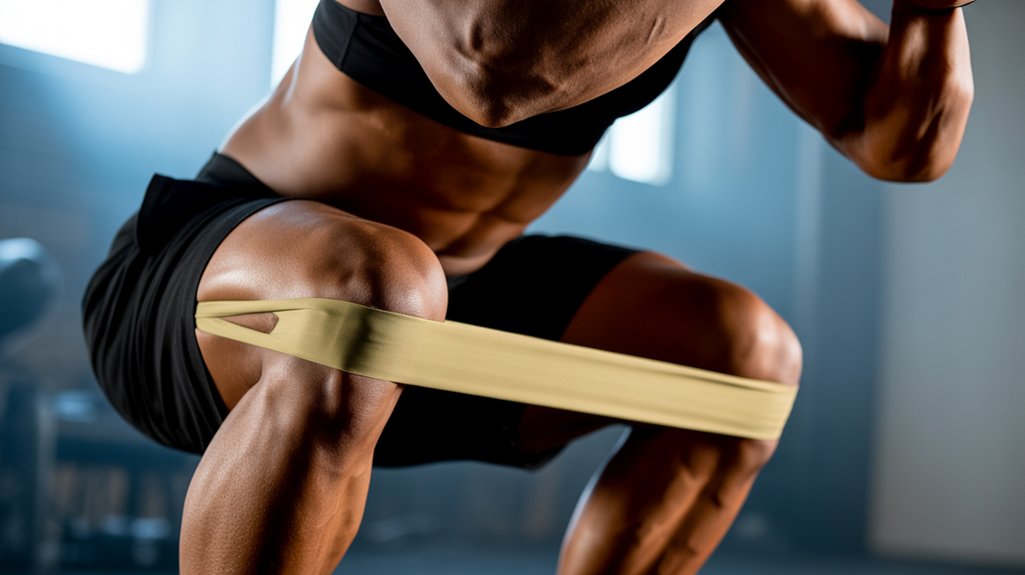
Although rubber bands can provide resistance, I prefer fabric bands for glute training because their grippy textile and embedded latex threads deliver consistent, non‑rolling resistance that reduces pinching and snapping.
I recommend them based on objective measures: textile weave increases friction coefficient against skin and clothing, latex integration preserves elastic modulus over repeated cycles, and width distributes pressure to avoid local shear.
In a band comparison, fabric options show superior durability and user comfort versus traditional rubber. For you, that means fewer adjustments mid‑set, lower skin irritation risk, and reliable biomechanics for targeted glute activation and measurable performance gains.
Choosing the Right Resistance Level for Progress
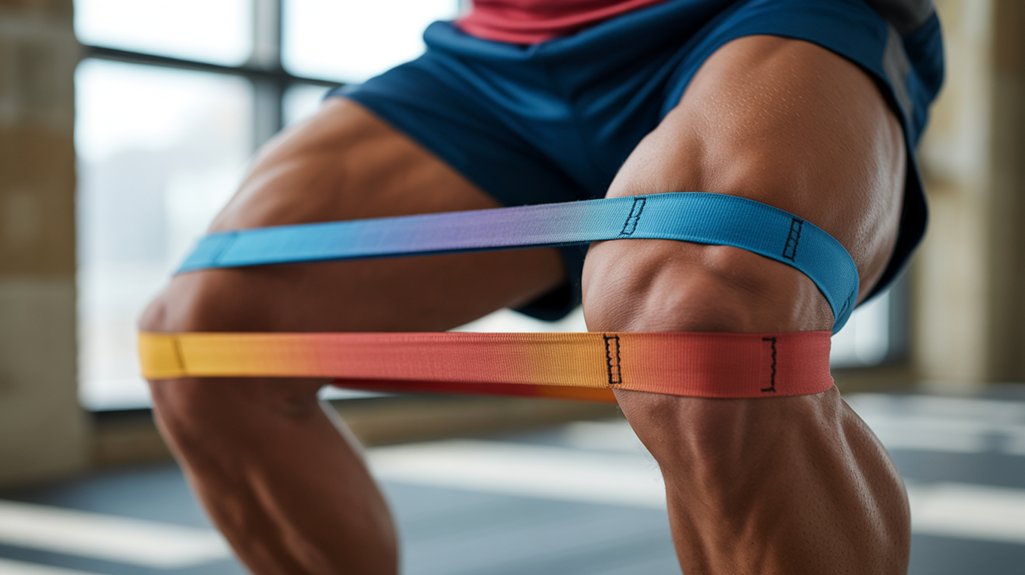
I recommend you choose a resistance that lets you perform 8–15 controlled reps per set with strict form, because that range optimizes hypertrophic stimulus and neuromuscular adaptation for glute and leg muscles while keeping joint load manageable.
I assess baseline capacity with a diagnostic set, noting failure point, movement quality, and tempo.
For resistance selection, use the light band when you can exceed 15 reps, medium within 8–15, heavy when you fail before eight.
Progress by increasing band tension or reps systematically every 1–3 weeks, track volume and perceived exertion, and prioritize consistent workout progression over isolated load jumps.
Top Exercises to Sculpt Legs and Glutes
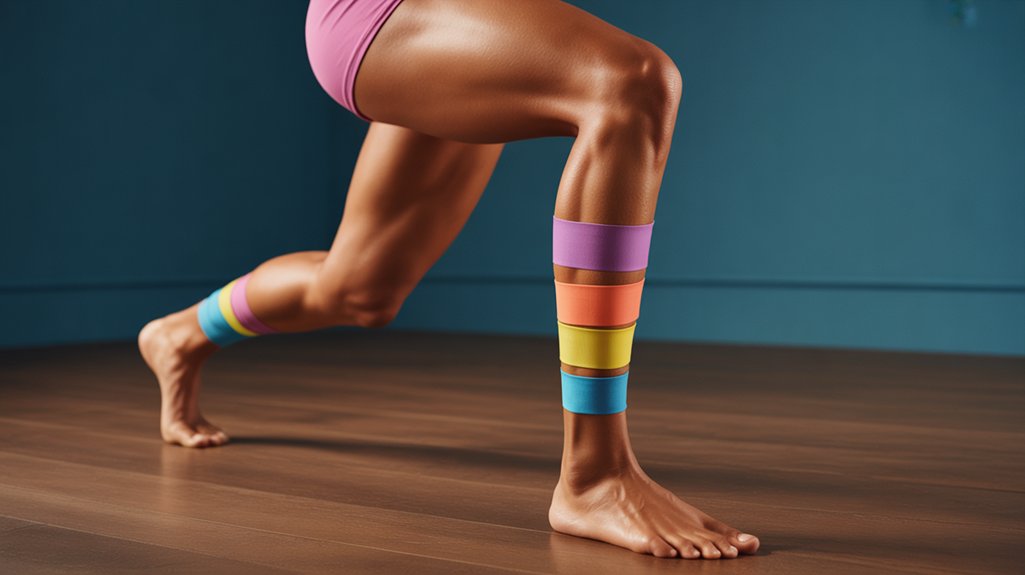
Applying the resistance-selection framework, I recommend a set of high-yield exercises to target glute and leg hypertrophy and force-production: banded squats, Bulgarian split squats, hip thrusts, lateral band walks, and standing kickbacks.
I prioritize progressive overload, tempo control, and measurable volume to induce muscle fiber recruitment and hypertrophy.
Banded squats and Bulgarian splits increase loading at end range; hip thrusts emphasize peak gluteal tension; lateral walks reinforce hip abduction capacity; kickbacks isolate posterior chain.
These movements exemplify leg sculpting with clear resistance benefits when paired with graded band tensions and systematic progression.
I’m tracking load, sets, reps, and RPE.
Proper Fit, Placement, and Form Tips
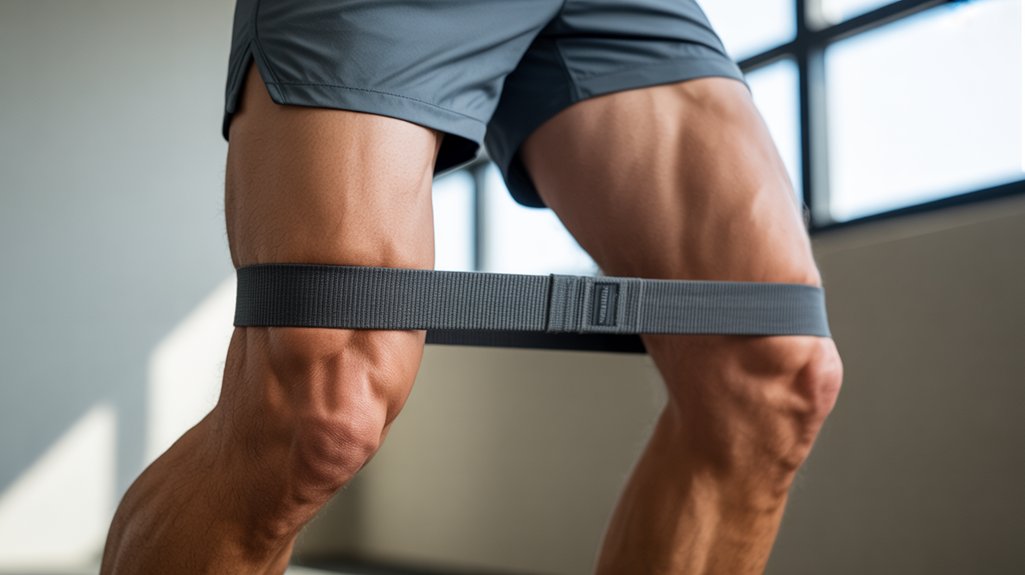
Anyone using fabric resistance bands should prioritize a snug, non‑constricting fit that sits flat against the skin to prevent slippage and distribute load evenly.
I recommend assessing band sizing by measuring thigh circumference and selecting the resistance that allows 8–15 controlled reps with maintained form.
For placement techniques, position bands just above knees for quad-focused work, or mid‑thigh for glute activation; higher placement reduces knee deviation.
I cue neutral spine, hip hinge where appropriate, and controlled tempo to avoid momentum.
Monitor skin compression and discomfort; adjust width or resistance if blanching or pain occurs to maintain safe, effective loading.
Travel, Portability, and Workout Convenience
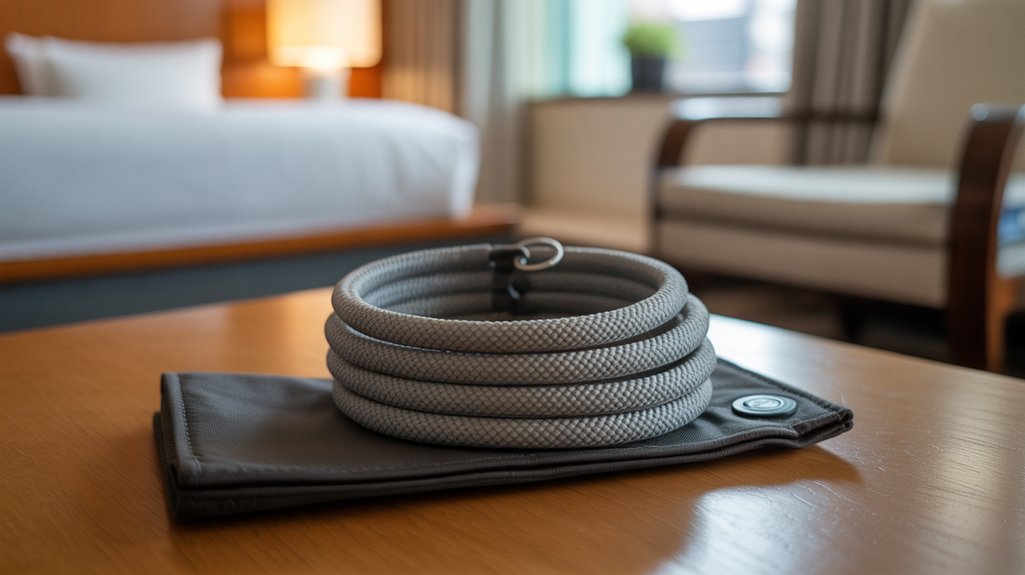
Because they pack flat and weigh under a pound, these fabric bands travel well and let me recreate effective leg and glute sessions anywhere with minimal setup.
I schedule brief, targeted circuits that fit variable workout schedules, maintaining progressive overload using three color-coded resistances.
Data-backed design — grippy fabric, consistent length, latex blend — minimizes slippage and maintains tension across environments.
I track sets, reps, and perceived exertion to quantify sessions during travel.
Fitness portability reduces barriers to adherence; I replace bulky equipment with 0.7-pound bands that sustain intensity and allow standardized, reproducible lower-body protocols on the go for consistent results.
Care, Cleaning, and Maximizing Band Lifespan
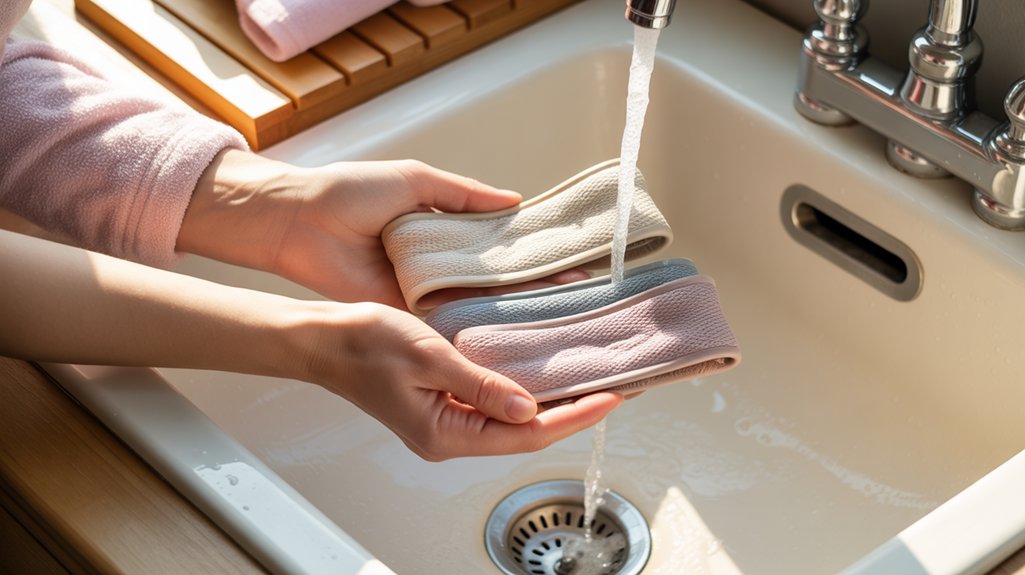
I extend band lifespan by following a concise care protocol grounded in the fabric-latex construction and manufacturer guidance.
I inspect seams and latex threads before each session, noting abrasion, fraying, or delamination. For cleaning, I use mild detergent, lukewarm water, and a soft cloth; machine washing and bleach are avoided.
After cleaning methods, I air-dry bands flat away from direct heat or sunlight to preserve elasticity. I rotate multiple bands to reduce fatigue accumulation and store them uncompressed in a cool, dry place.
These band maintenance tips minimize failure risk and sustain consistent resistance over time with documented intervals.
Warranty, Pricing, and Smart Purchase Advice
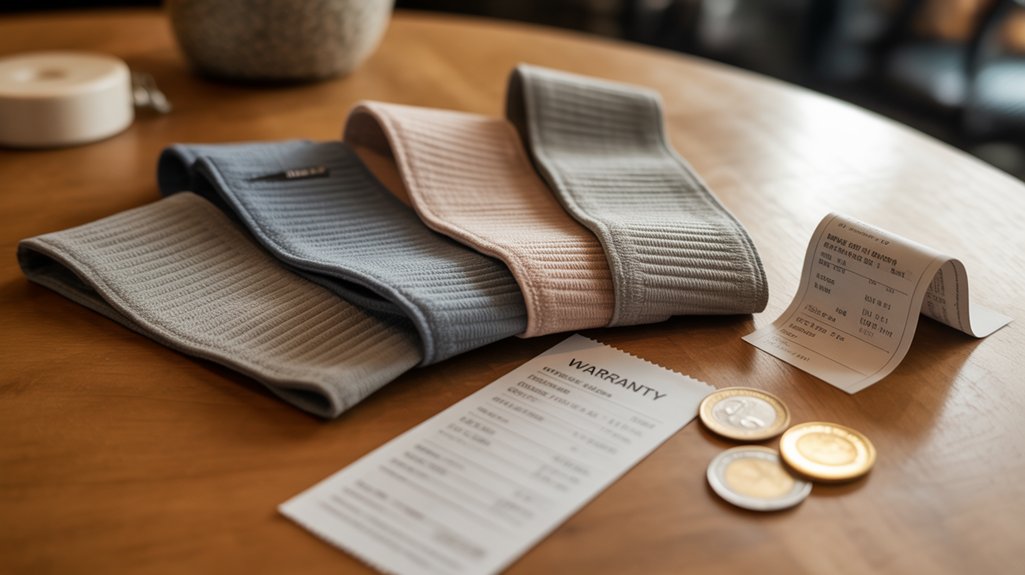
Regular maintenance reduces failure risk and clarifies what warranty coverage will matter over time.
I recommend verifying warranty details—this product includes a 1-year manufacturer warranty—so you know replacement or refund conditions.
Price at $19.97 with Prime shipping yields strong value versus competitors; track sales velocity and reviews (4.7/5, 2,728 ratings) to assess longevity.
For smart purchasing, prioritize bands with documented materials (fabric blend, latex threads), consistent dimensions, and return policies allowing free returns.
Inspect size reports to avoid fit issues.
I buy when warranty, user ratings, and price align with my risk tolerance and training needs for sustainable results consistently.
Conclusion
I choose durable fabric bands because their grippy textile and embedded latex threads provide consistent, measurable resistance without rolling or snapping, improving exercise fidelity. I select resistance by progressive overload principles and match band tension to movement patterns. I prioritize correct fit and placement to target glutes safely, and I use portable bands for travel-friendly sessions. I clean them per manufacturer guidelines to prolong life and weigh warranty and price against durability data before buying.