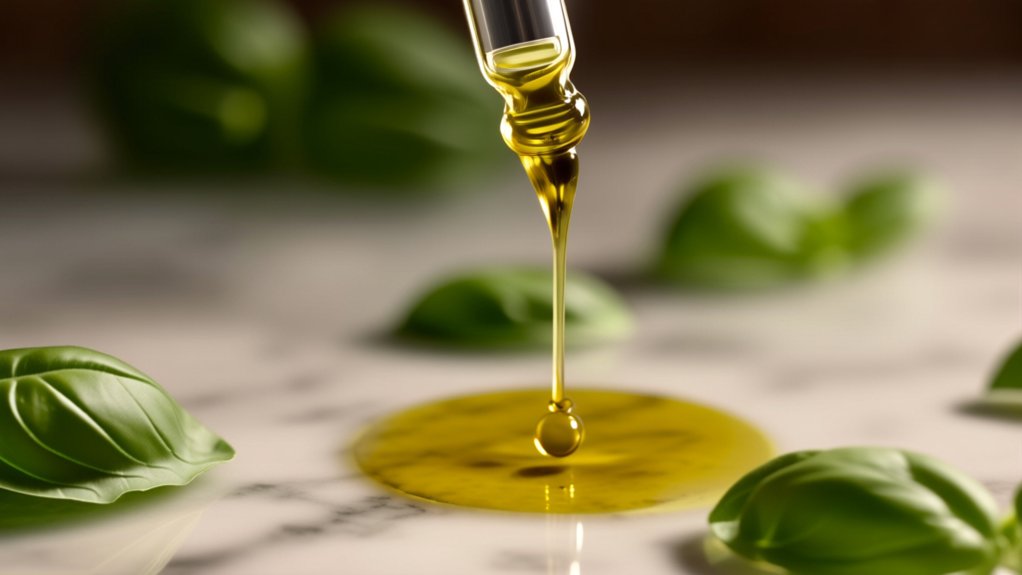
The essential oil market has witnessed an unexpected surge in basil oil popularity, with sales increasing 340% over the past two years. Consumer interest extends beyond traditional aromatherapy applications into skincare routines and household cleaning solutions. This botanical extract, once relegated to culinary use, now commands premium pricing in wellness circles. However, quality variations between brands remain significant, and safety concerns around topical application continue to surface among dermatologists and aromatherapy practitioners.
The Rise of Basil Essential Oil in Modern Aromatherapy
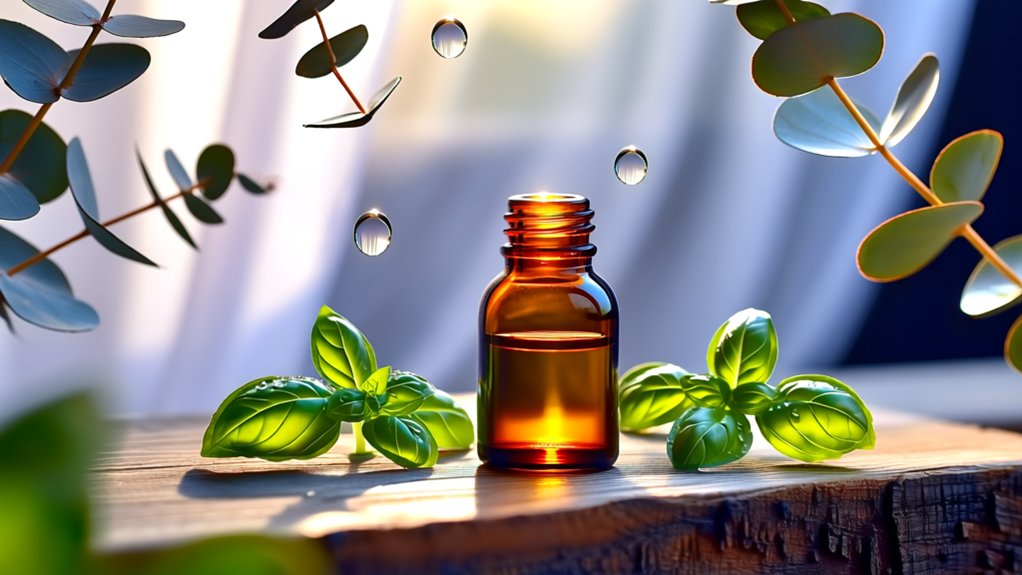
While aromatherapy has ancient roots, basil essential oil has experienced remarkable growth in contemporary wellness practices. Modern consumers increasingly seek natural alternatives for stress relief and home fragrance, driving basil oil’s popularity beyond traditional uses.
The oil’s versatility appeals to both aromatherapy newcomers and experienced practitioners, offering benefits for mental clarity and skin care. Steam-distilled processing ensures purity, while various bottle sizes accommodate different needs.
Professional-grade formulations now compete with accessible consumer products, reflecting diverse market demands. Organic certifications and therapeutic-grade standards have elevated basil oil’s credibility, establishing it as a staple in modern holistic wellness routines.
Understanding Pure vs. Diluted Basil Oil Products
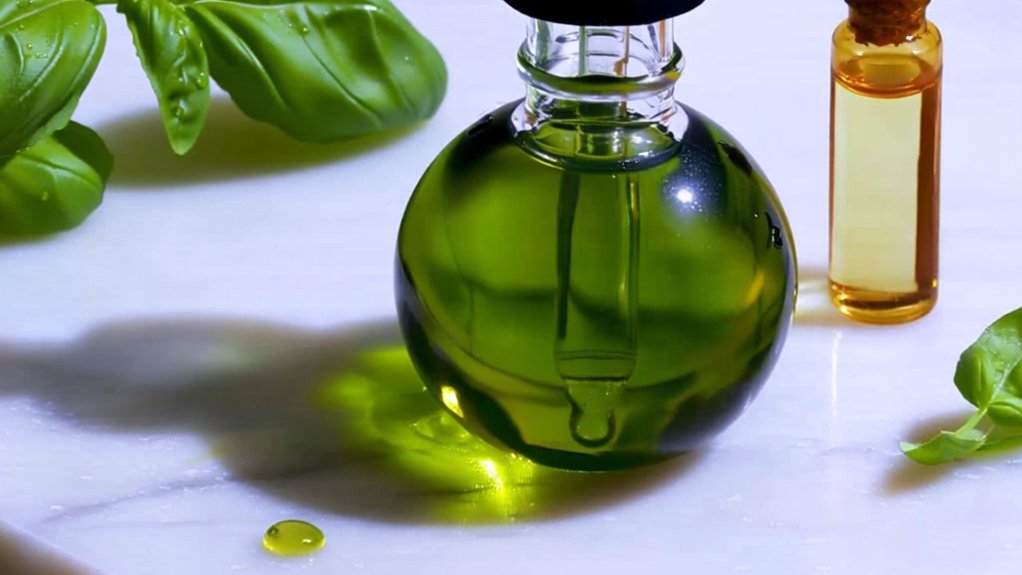
How can consumers distinguish between pure and diluted basil essential oil products in today’s saturated market?
Product labels provide crucial indicators, with terms like “100% Pure” and “Undiluted” appearing across reputable brands including HIQILI, Absolute Aromas, and BIO Aroma Labs.
Certification marks such as EU Organic and Soil Association logos verify authenticity and quality standards.
Price variations offer additional clues—pure oils typically cost more per milliliter, as evidenced by BIO’s £98.20/100ml pricing compared to diluted alternatives.
Therapeutic grade designations and steam distillation methods further distinguish premium products.
Consumer reviews averaging 4.4-4.5 stars often correlate with genuine, undiluted formulations.
Top-Rated Basil Oil Brands and Customer Reviews
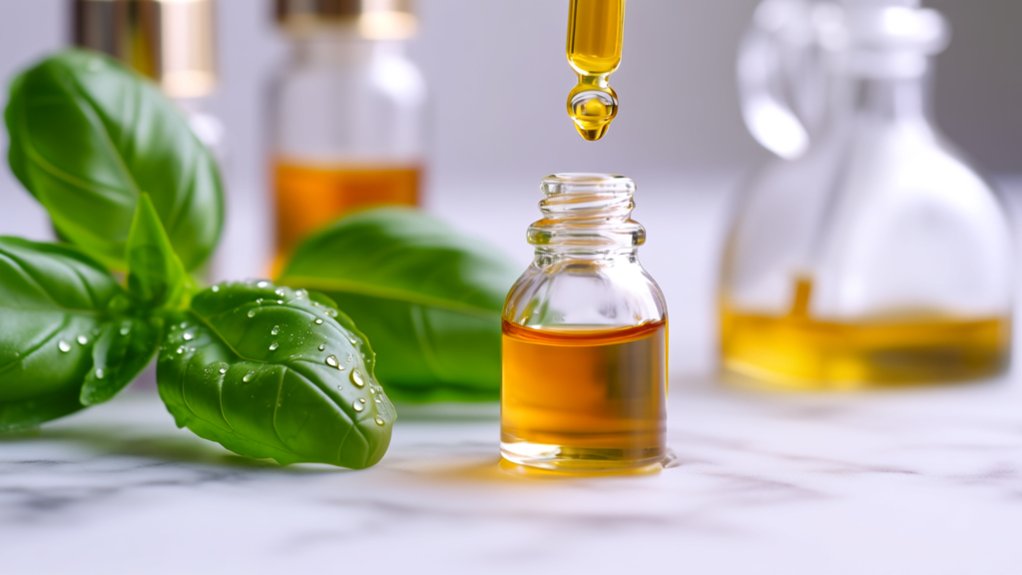
Which basil oil brands consistently earn the highest customer satisfaction ratings in today’s competitive essential oil market?
Absolute Aromas leads with impressive 4.5-star ratings from over 7,000 reviews, offering certified organic options in multiple sizes.
HIQILI demonstrates strong market presence with 4.4-star ratings across 20,667 customer reviews, providing affordable 30ml bottles.
Ecodrop’s Holy Basil variant maintains 4.4 stars from nearly 12,000 reviews, featuring Soil Association certification.
Calmer Solutions shows varied performance with ratings ranging from 4.1 to 4.8 stars depending on bottle size.
BIO Aroma Labs earns 4.4 stars with EU Organic certification, though from fewer reviews.
Organic Certification and Quality Standards for Basil Oils

Although consumers increasingly prioritize organic essential oils, understanding certification standards proves crucial for making informed purchasing decisions.
EU Organic certification requires products contain at least 95% organic material, with control body codes and farm locations displayed alongside certification logos. The Soil Association provides additional organic verification, ensuring sustainable farming practices and animal welfare standards.
Brands like BIO (Aroma Labs) feature chemotyped oils with AB certification, while Ecodrop displays comprehensive organic credentials. Pure, undiluted formulations remain essential regardless of certification status.
Steam distillation methods and therapeutic-grade classifications further indicate quality, helping consumers distinguish between premium organic basil oils and conventional alternatives.
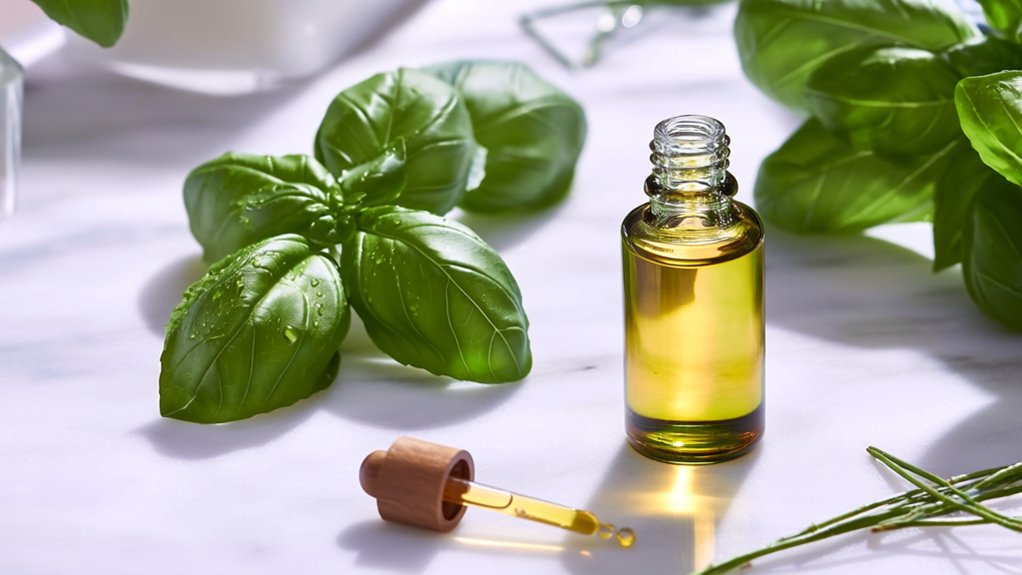
Basil essential oil prices vary significantly across the market, ranging from budget-friendly options under £5 to premium formulations exceeding £40 for larger quantities. Budget selections like HIQILI’s 30ml bottle retail for £5.94, offering excellent value per millilitre. Mid-range options include Absolute Aromas’ 10ml at £7.95 and BIO’s organic-certified 5ml for £4.91.
Premium choices feature larger volumes, with Calmer Solutions’ 100ml priced at £48.01 and Absolute Aromas’ 100ml at £42.67. Price variations reflect factors including organic certification, bottle size, extraction methods, and brand positioning. Subscribe & Save discounts frequently reduce costs by 5-15%.
Basil Oil for Skin Care: Benefits and Application Methods
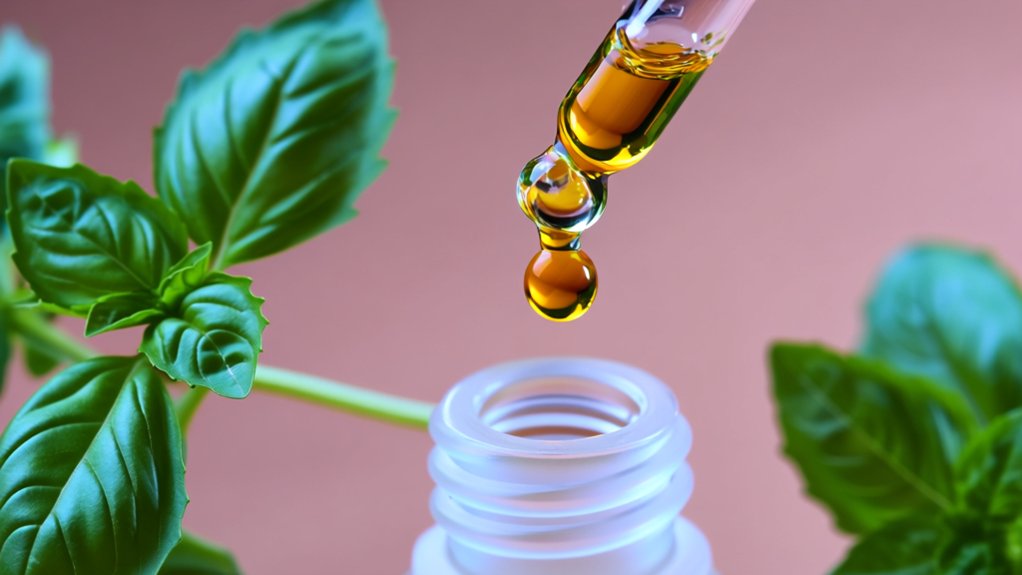
Skincare enthusiasts increasingly turn to basil essential oil for its therapeutic properties and versatile application methods.
The oil offers antimicrobial and anti-inflammatory benefits, making it suitable for acne-prone skin when properly diluted.
Application methods include facial steam treatments, where 2-3 drops are added to hot water, and topical use through carrier oil blends at 1-2% concentration.
Direct application should be avoided due to potential skin sensitivity.
Holy basil varieties provide additional antioxidant properties for anti-aging routines.
Patch testing remains essential before incorporating basil oil into skincare regimens, ensuring individual tolerance and preventing adverse reactions.
Home Diffusion Techniques With Basil Essential Oil
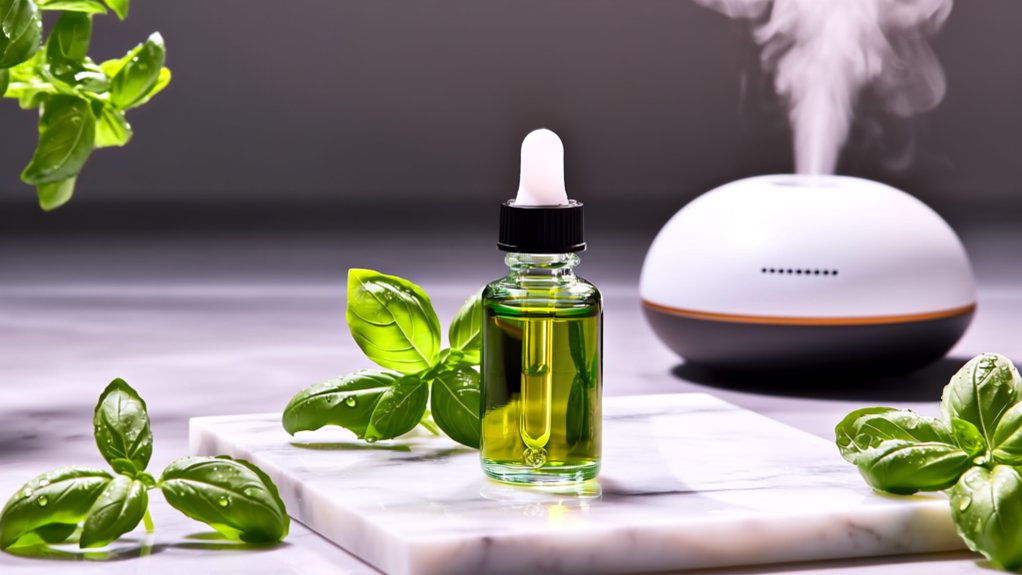
When creating an aromatic atmosphere at home, basil essential oil transforms living spaces through various diffusion methods that maximize its therapeutic benefits.
Electric diffusers provide consistent vapor distribution, requiring 3-5 drops per 100ml water for optimal concentration.
Reed diffusers offer continuous passive release, lasting weeks with proper oil ratios.
Ultrasonic diffusers preserve oil integrity through cool mist technology, ideal for maintaining basil’s antimicrobial properties.
Traditional oil burners create immediate aromatic impact but require careful temperature control.
Room sprays deliver instant freshening when diluted properly.
Each method varies in intensity and duration, allowing users to customize their aromatic experience according to space size and personal preferences.
Size Options: Choosing Between 10ml, 30ml, and 100ml Bottles

While essential oil enthusiasts often focus on quality and purity, bottle size significantly impacts both cost-effectiveness and product longevity.
The 10ml size suits beginners or occasional users, typically priced between £4.91-£12.99, offering approximately 200-250 drops for testing preferences without major investment.
The 30ml option provides better value per milliliter, ranging £5.94-£11.99, ideal for regular diffusion or skincare routines lasting 2-3 months.
The 100ml size delivers maximum cost efficiency at £42.67-£48.01, perfect for frequent users or professional applications, though essential oils can oxidize over time, making smaller bottles preferable for infrequent use.
Holy Basil vs. Sweet Basil: Comparing Essential Oil Varieties
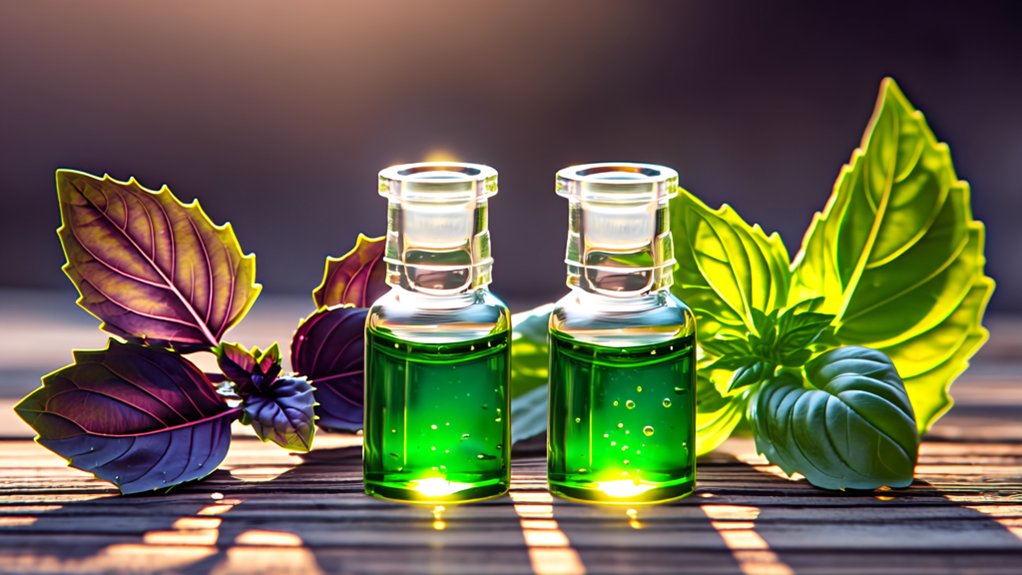
Though both varieties belong to the Ocimum family, holy basil (Ocimum tenuiflorum) and sweet basil (Ocimum basilicum) produce essential oils with distinctly different therapeutic properties and applications.
Sweet basil oil offers antimicrobial benefits and energizing aromatherapy effects, making it popular for diffusers and general skincare.
Holy basil, also known as tulsi, provides stronger adaptogenic properties traditionally used for stress relief and respiratory support.
Sweet basil dominates commercial markets with wider availability in various sizes from 10ml to 100ml bottles. Holy basil commands premium pricing due to its specialized cultivation and revered status in traditional medicine practices.
Subscribe and Save: Smart Shopping for Regular Basil Oil Users
How can dedicated aromatherapy practitioners maximize their savings while maintaining consistent access to quality basil essential oils?
Subscribe and Save programs offer substantial discounts for regular users.
Absolute Aromas provides £7.15 pricing versus £7.95 retail through their subscription service.
Ecodrop’s Holy Basil drops from £9.99 to £9.49 with automatic delivery.
HIQILI offers £6.79 subscription pricing compared to £7.55 standard rates.
These programs ensure continuous supply while reducing per-unit costs by 5-15%.
Regular practitioners benefit from predictable inventory management and budget planning.
Subscription flexibility allows quantity adjustments and delivery frequency modifications based on usage patterns.
Conclusion
The basil oil market continues expanding as consumers prioritize natural wellness solutions for home and skincare applications. Quality indicators like organic certification, steam distillation methods, and proper dilution guidelines drive purchasing decisions. Subscription services and varied bottle sizes accommodate different usage patterns, while clear labeling helps users safely incorporate basil oil into daily routines. This trend reflects broader consumer shifts toward plant-based alternatives in personal care and aromatherapy practices.