
You’ve probably heard that your strongest days are behind you after 50, but that’s simply not true. Your body’s changing, yes, but it’s still capable of remarkable transformations through strategic strength training. The real challenge isn’t your age—it’s knowing which exercises will work with your body instead of against it. Once you understand what your muscles and joints actually need at this stage, everything changes.
Breaking Free From Age-Related Fitness Myths

Many women over 50 believe they’ve missed their window for building real strength, but this couldn’t be further from the truth.
You don’t need to accept joint pain, poor balance, or muscle weakness as your “new normal.” These aren’t inevitable consequences of aging—they’re often results of inactivity and outdated fitness approaches.
Traditional workouts designed for younger women won’t serve your body’s current needs. Your hormones, bone density, and recovery patterns have changed, requiring specialized strategies.
You can build genuine strength, boost metabolism, and enhance flexibility with age-appropriate exercises that work with your body, not against it.
Understanding Your Body’s Changing Needs After 50

When you hit 50, your body undergoes significant hormonal shifts that directly impact how you build and maintain muscle mass. Declining estrogen affects bone density, while slower metabolism makes weight management challenging.
Your joints may feel stiffer, and recovery takes longer than before.
However, these changes don’t mean accepting weakness or pain as inevitable. Your body still responds remarkably well to proper strength training when you work with it, not against it.
Focus on joint-friendly exercises that promote flexibility while building real strength. Understanding these physiological changes empowers you to choose training methods that enhance your vitality rather than compromise it.
Essential Strength Training Benefits for Mature Women
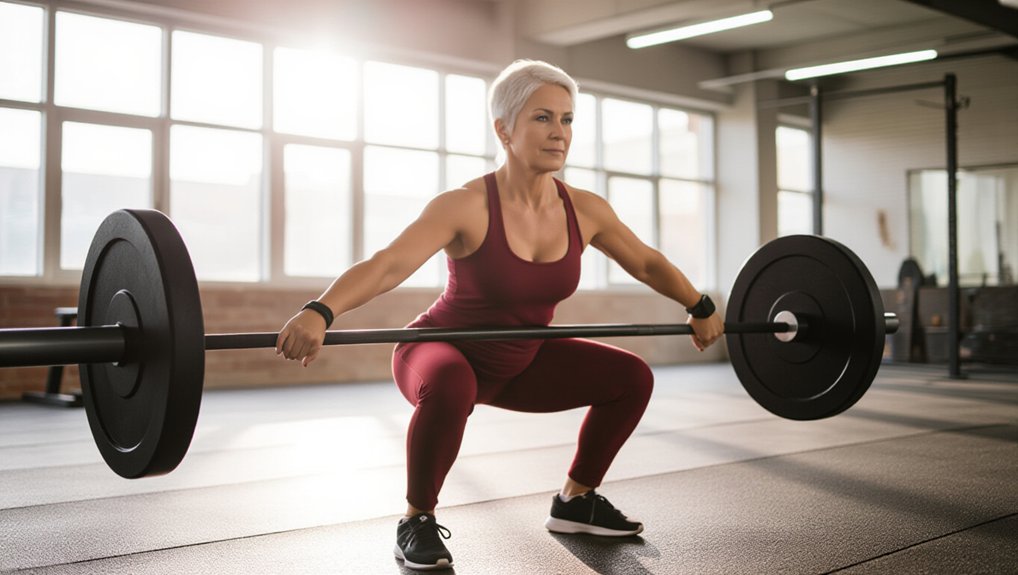
Beyond merely maintaining your current fitness level, strength training after 50 delivers transformative benefits that directly address the unique challenges you’re facing.
You’ll boost bone density, protecting against fractures while building real strength through gentle, joint-friendly exercises. Your balance and coordination improve dramatically, reducing fall risk significantly.
Strength training reignites your metabolism without extreme diets or punishing workouts, helping combat stubborn weight gain. You’ll enhance flexibility while addressing menopause-related health challenges.
These targeted exercises promote independence and vitality, proving that aging doesn’t mean accepting a diminished “new normal” – you’re capable of becoming stronger than ever.
Joint-Friendly Exercises That Build Real Power

While traditional high-impact workouts can stress aging joints, you’ll discover that strategic strength-building exercises work with your body’s natural mechanics rather than against them.
These gentle movements target major muscle groups while protecting vulnerable areas like knees, hips, and shoulders. You’ll build genuine strength through resistance exercises that emphasize controlled movements and proper form over speed or intensity.
Wall push-ups, seated rows, and modified squats create powerful results without jarring impacts. Your joints will actually feel better as surrounding muscles strengthen to provide improved support, stability, and protection during daily activities.
Creating Your 30-Minute Home Workout Routine

Since you’ve mastered joint-friendly movements, it’s time to structure them into a practical daily routine that fits seamlessly into your schedule.
Your 30-minute home workout divides into three 10-minute segments: warm-up, strength training, and cool-down.
Begin with gentle mobility exercises to prepare your joints. Focus your strength segment on compound movements targeting major muscle groups—squats, modified push-ups, and resistance band exercises work perfectly.
End with stretching to maintain flexibility and prevent stiffness. You don’t need expensive equipment or gym memberships.
Consistency trumps intensity, so commit to this manageable timeframe that respects your body’s needs while building lasting strength.
Nutrition Strategies to Support Your Strength Journey

As you establish your strength training routine, proper nutrition becomes the foundation that transforms your workouts from simple movement into genuine muscle-building power.
You’ll need adequate protein to repair and build muscle tissue – aim for lean sources like fish, chicken, and legumes at every meal.
Don’t neglect hydration; water supports joint function and nutrient transport.
Complex carbohydrates fuel your workouts, while healthy fats reduce inflammation.
Time your meals strategically: eat protein within two hours post-workout for optimal recovery.
Tracking Progress and Staying Motivated Long-Term

Because lasting change happens through consistent small actions rather than dramatic bursts of effort, you’ll find that tracking your strength training progress becomes the bridge between today’s workout and next year’s transformation.
Use a simple journal to record exercises, weights, and how you feel after each session. Celebrate small victories like lifting heavier weights or completing an extra rep. Take monthly photos and measurements beyond the scale.
Join supportive communities of women over 50 who understand your journey. Remember, progress isn’t always linear—some days you’ll feel stronger, others you won’t, and that’s perfectly normal for sustainable growth.
Conclusion
You’ve discovered that age doesn’t define your fitness potential—you do. By embracing strength training, choosing joint-friendly exercises, and fueling your body properly, you’re not just maintaining your health; you’re transforming it. Every workout you complete, every healthy choice you make, proves that women over 50 can build incredible strength and vitality. Your journey starts now, and your strongest days are still ahead of you.