You can build real strength after 50 without pounding your joints, and research shows resistance work helps preserve bone density, increase muscle, and cut fall risk. You may worry about soreness or injury, and that’s normal. With low-impact moves, simple progressions, and nutrition and sleep that support recovery, you’ll get safer, more confident in daily life. Here’s how to get started safely.
Why Strength Training Matters After 50

Because muscle and bone naturally decline with age, starting strength training after 50 is one of the most effective steps you can take to protect your health and independence.
You’ll preserve bone density, rebuild lost muscle, improve balance, and lower fall and fracture risk. Strength benefits extend to better metabolic health, pain management, and daily task ease, so you move with more confidence.
Programs tailored to your body reduce joint stress while boosting mobility and energy. This approach is evidence-based, practical, and centered on empowering women to maintain autonomy, resilience, and quality of life as they age each day.
Common Fears, Misconceptions, and How to Get Started
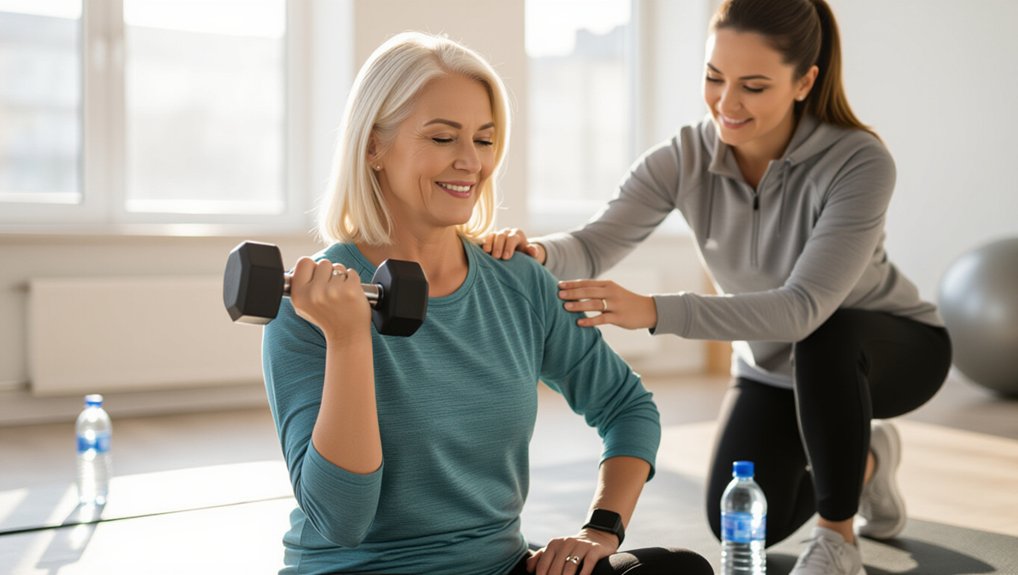
How do you begin when fear of injury, joint pain, or the myth that weight training will make you bulky hold you back?
Start small: consult your healthcare provider, set measurable, realistic goals, and prioritize consistency over intensity. Understand that research shows progressive resistance improves bone and muscle without masculinizing effects.
Expect setbacks and reframe them as learning—these mindset shifts reduce anxiety and support overcoming barriers. Use modifications, track progress, and seek community or a qualified coach for accountability.
Begin with brief, frequent sessions, celebrate gains, and build confidence so strength becomes sustainable, not intimidating over months with patience.
Gentle, Joint-Friendly Exercises That Build Real Strength

Start with simple, low-impact moves that load your muscles without stressing your joints—think sit-to-stand, wall push-ups, and hip hinges with light resistance.
You’ll focus on controlled ranges, slow eccentric phases, and progressive overload using resistance bands or light weights.
Include balance drills and core work to support posture improvement and reduce fall risk.
Modify reps, sets, and rest for joint comfort; stop with sharp pain.
Evidence shows consistent, joint-friendly strength builds bone density and functional independence.
Track progress, celebrate small wins, and consult your clinician for osteoporosis or arthritis guidance.
Aim for two sessions weekly, adjusting as needed gradually.
Simple 30-Minute At-Home Workouts for Busy Women
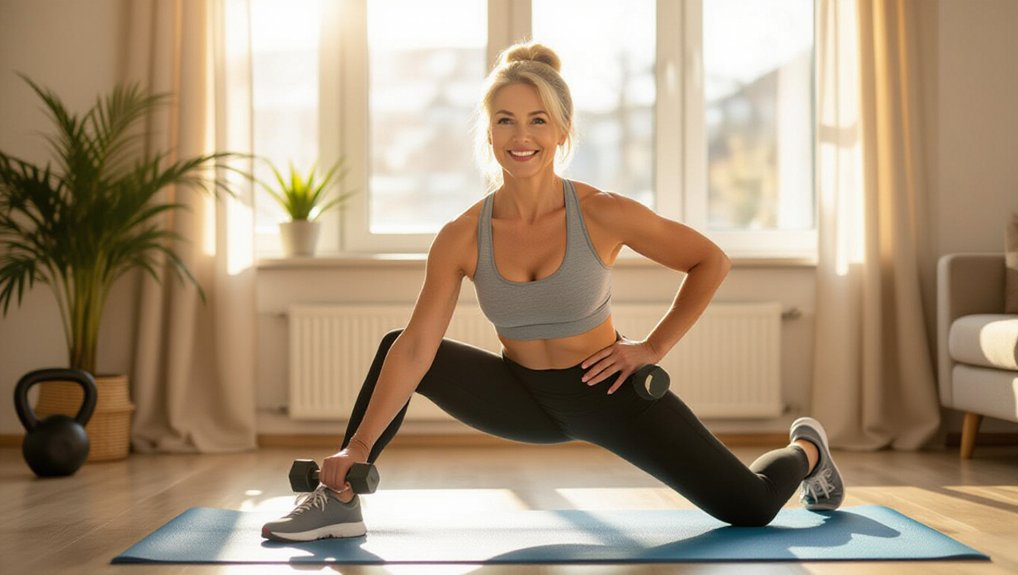
Three 30-minute sessions a week can deliver noticeable strength, balance, and energy gains without overwhelming your schedule.
You’ll follow compact, evidence-based circuits combining resistance, balance, and mobility—squats, rows, heel raises, and controlled lunges—scaled for joints and progress.
Use bodyweight, bands, or light weights; rest and form matter.
These simple home workouts fit mornings or lunch, supporting effective time management with quick warm-ups and focused blocks.
Track reps, add small increases weekly, and prioritize consistency over intensity.
You’ll protect joints, improve function, and rebuild confidence without long gym visits or complicated routines.
Start where you’re and progress safely today.
Nutrition, Sleep, and Recovery to Support Muscle and Bone Health

Those manageable 30-minute workouts will get you moving, but what you eat, sleep, and rest between sessions determines how well your muscles and bones adapt.
Prioritize protein (20–30g per meal), calcium, vitamin D, and omega-3s to support bone remodeling and muscle repair; these practical nutrition tips reduce sarcopenia risk.
Aim for 7–9 hours nightly; deep sleep fuels growth hormone and recovery.
Use recovery strategies like active recovery: gentle mobility, walking, and targeted stretching to maintain circulation.
Schedule rest days and progressive overload to avoid injury.
Listen to your body, adjust based on energy and pain, and consult your clinician.
Tracking Progress, Motivation, and Building Consistency
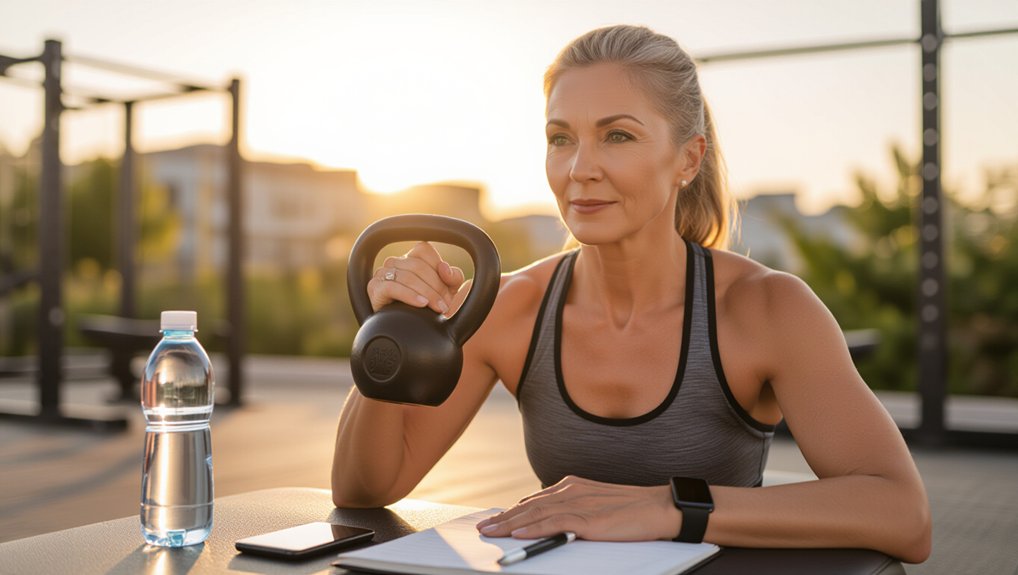
How will you know you’re getting stronger if you don’t measure it? Track sets, reps, weight, and functional wins in a simple strength tracker or mini journal so progress assessment is clear.
Set small, specific goals, use short-term milestones, and celebrate consistency—these motivation strategies boost adherence and self-efficacy. Schedule sessions like appointments, pair workouts with enjoyable music or a buddy, and review monthly trends to adjust loads safely.
Expect non-linear gains; rest, sleep, and nutrition influence results. Keep records, stay patient, and focus on steady, measurable habits—consistency compounds into lasting strength and improved quality of life daily.
Modifications for Arthritis, Osteoporosis, Balance, and Mobility
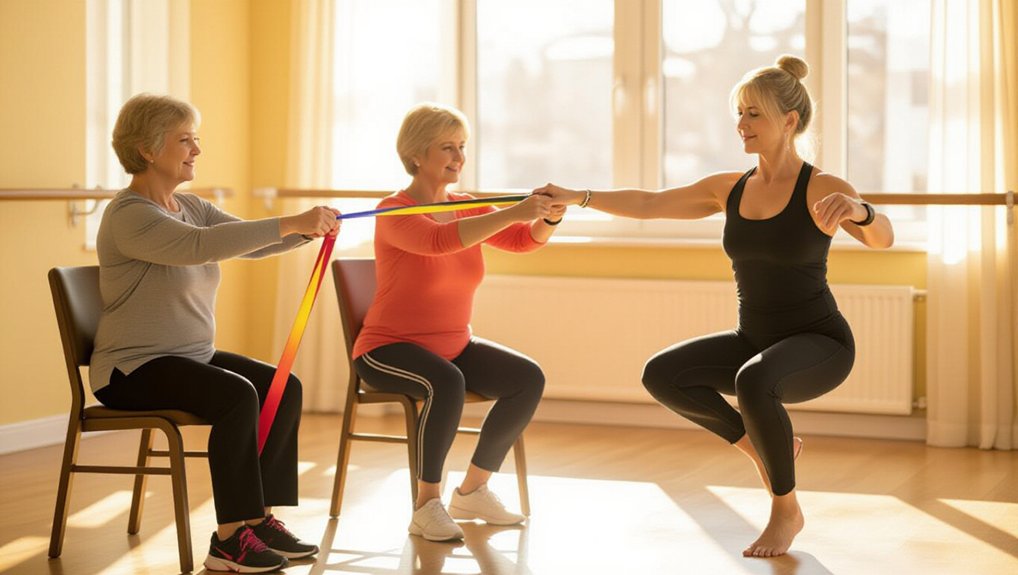
Although joint pain and reduced bone density can feel limiting, you can still build strength safely by using targeted modifications that reduce risk and preserve function.
Prioritize low-impact, controlled movements, like seated or supported squats and slow heel raises, to protect joints. Use arthritis adaptations—longer warm-ups, smaller ranges, lighter resistance—and rely on pain-free progression.
For bone health, include osteoporosis exercises such as weighted step-ups, modified deadlifts, and balance drills to stimulate bone and prevent falls.
Work with a clinician for precautions, focus on posture and proprioception, and progress gradually to maintain independence and confidence over months with realistic goals.
Conclusion
You’re never too old to get stronger; research shows resistance training preserves muscle and bone and lowers fall risk. Start gently, use joint-friendly moves, and prioritize sleep, protein, and gradual progression. Track small wins, adapt exercises for arthritis, osteoporosis, or balance issues, and seek professional guidance when needed. Consistency beats perfection—short, regular sessions will build resilience, confidence, and independence, helping you move through life with greater ease and joy. One steady step at a time.