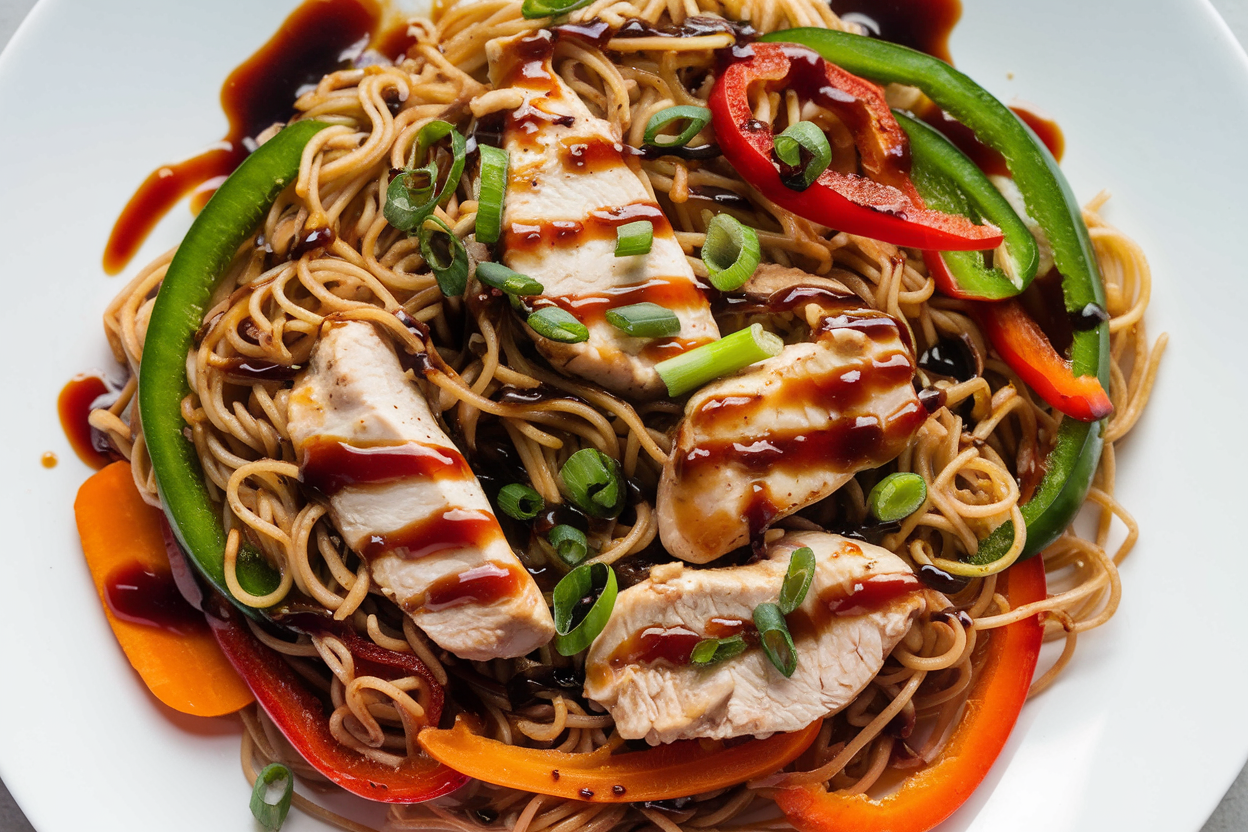
You want a meal that hits like takeout but lands like a personal win? This Chicken Stir-fry with rice noodles, bell peppers, carrots, and tamari sauce does exactly that—crisp veggies, juicy chicken, glossy sauce, zero regrets. It’s fast enough for Tuesday night chaos and impressive enough for “fake-away” bragging rights.
No complicated steps, no chef-y drama—just flavor per minute. If you can boil water and stir, you can make this, and it’ll taste like you knew what you were doing all along.
What Makes This Special
This stir-fry isn’t pretending to be healthy—it actually is, without tasting like homework. Rice noodles keep it light and gluten-free friendly (tamari to the rescue), while bell peppers and carrots add sweetness and crunch.
The sauce is umami-forward with a clean tamari base, balanced by a kiss of honey and fresh ginger. It’s a high-heat, high-reward dish: textures pop, flavors layer, and the whole thing gets glossy and irresistible in minutes. Plus, it’s modular.
Swap proteins, tweak veggies, change the heat level—you’re the boss. And unlike soggy takeout, this keeps its snap and shine when you make it right.
Shopping List – Ingredients
- 8 oz (225 g) rice noodles (wide or medium width)
- 1 lb (450 g) boneless, skinless chicken thighs or breasts, thinly sliced
- 1 red bell pepper, thin strips
- 1 yellow or orange bell pepper, thin strips
- 2 medium carrots, julienned or thinly sliced on a bias
- 3 cloves garlic, minced
- 1-inch piece fresh ginger, peeled and minced
- 3 green onions, sliced (whites and greens separated)
- 2–3 tbsp neutral oil (avocado, canola, or peanut oil)
- 1 tbsp sesame oil (for finishing)
Sauce
- 1/3 cup tamari (or low-sodium soy sauce if gluten isn’t an issue)
- 1 tbsp honey or maple syrup
- 1 tbsp rice vinegar
- 1–2 tsp chili-garlic sauce or sriracha (adjust to heat tolerance)
- 1 tsp cornstarch (for light thickening)
- 1/4 cup water (to balance saltiness)
Optional Boosters
- 1/2 cup snow peas or snap peas, trimmed
- 1 tbsp toasted sesame seeds, for garnish
- Lime wedges, for serving
- Fresh cilantro or basil, chopped
Let’s Get Cooking – Instructions
- Prep like a pro. Slice the chicken thinly across the grain. Julienne the carrots and slice the peppers.
Mince garlic and ginger. Separate the green onion whites and greens. Stir-fries move fast—do the chopping now, not mid-sizzle.
- Soften the noodles. Soak rice noodles in very hot water for 6–8 minutes until just pliable but not fully soft.
Drain and rinse with cold water to stop cooking. Toss with a drizzle of oil to prevent clumping.
- Whisk the sauce. In a bowl, mix tamari, honey, rice vinegar, chili-garlic sauce, cornstarch, and water. Taste and tweak—sweetness should balance salt, with a gentle kick.
- Heat the pan like you mean it. Set a large wok or skillet over high heat.
Add 1 tbsp oil. When it shimmers, you’re ready.
- Cook the chicken. Add chicken in a single layer. Season lightly with salt and pepper.
Sear 3–4 minutes, stirring once or twice, until just cooked and lightly browned. Remove to a plate.
- Veggie time. Add another 1 tbsp oil. Toss in carrots and bell peppers (and peas if using).
Stir-fry 2–3 minutes until crisp-tender with a little char. Push veggies to the edges.
- Aromatics in. Add a touch more oil if the pan is dry, then drop in garlic, ginger, and green onion whites. Stir 30 seconds until fragrant—don’t burn them or they’ll get bitter and rat you out.
- Bring it together. Return chicken to the pan.
Add noodles and pour in the sauce. Toss vigorously for 1–2 minutes as the sauce thickens and coats everything. If noodles seem tight, splash in 1–2 tbsp water.
- Finish and garnish. Kill the heat.
Stir in sesame oil and green onion tops. Sprinkle sesame seeds and herbs. Serve with lime wedges for extra brightness.
- Plate and eat. Don’t overthink it.
This dish peaks hot and glossy—aka now.
Preservation Guide
- Fridge: Store leftovers in an airtight container up to 3 days. Add a teaspoon of water before reheating to re-loosen the sauce.
- Reheat: Best in a hot skillet 2–3 minutes, tossing gently. Microwave works in a pinch (60–90 seconds), but expect softer noodles.
- Freezer: Not ideal.
Rice noodles get mushy after thawing. If you must, freeze the chicken-veggie-sauce portion and add fresh noodles when reheating.
- Meal prep tip: Keep sauce, prepped veggies, and sliced chicken separate. Cook fresh in 10 minutes flat when hunger strikes.
Why This is Good for You
- Lean protein: Chicken brings iron, B vitamins, and satiety without the heavy crash.
- Veggie density: Bell peppers are loaded with vitamin C; carrots bring beta-carotene for eye health.
Color = nutrients.
- Better sodium control: Using tamari with water dilution and a touch of honey balances flavor without a salt bomb.
- Gluten-free friendly: Rice noodles and tamari make this accessible, FYI.
- Healthy fats: Sesame oil for finishing gives flavor without needing a deep fry.
What Not to Do
- Don’t overcrowd the pan. Steam = soggy. Work in batches if your skillet is small.
- Don’t overcook noodles. Slightly underdone going into the pan is perfect; they’ll finish in the sauce.
- Don’t add sauce too early. You’ll drown the sear and lose that coveted wok-kissed flavor.
- Don’t skip aromatics. Garlic and ginger are the soul. Without them, it’s just vibes and soy.
- Don’t use olive oil. Low smoke point.
You’ll get bitterness and a sad kitchen.
Mix It Up
- Protein swaps: Thin-sliced beef, pork, shrimp, or tofu (press it!). For tofu, cornstarch-coat and pan-crisp first.
- Veggie upgrades: Broccoli florets, mushrooms, napa cabbage, or baby bok choy. Add heartier veg earlier; leafy ones last.
- Heat variations: Use fresh chilies, chili crisp, or a dash of white pepper if you want stealth spice.
- Citrus pop: Finish with lime zest and juice for brightness that makes the whole dish sing.
- Nutty crunch: Toss in roasted peanuts or cashews at the end.
Texture matters.
- Saucy twist: Add a spoon of oyster sauce for depth or a splash of fish sauce for umami thunder (go easy).
- Low-carb lane: Swap rice noodles for spiralized zucchini or shirataki noodles—different vibe, still tasty.
FAQ
Can I use soy sauce instead of tamari?
Yes. Use low-sodium soy sauce and keep the water in the sauce to balance saltiness. If it tastes too salty, add a splash more water and a touch more honey.
What if I don’t have a wok?
A large, heavy skillet works great.
The real key is high heat and not crowding the pan. Let ingredients kiss the metal and char slightly—flavor jackpot.
How do I keep the noodles from clumping?
After soaking, rinse with cold water and toss with a little oil. In the pan, keep everything moving and add a tablespoon or two of water if they tighten up.
Can I make this vegetarian?
Absolutely.
Swap chicken for extra-firm tofu or tempeh. Crisp it first for texture, then proceed with the recipe as written.
Is this spicy?
Mild to medium by default. You control the heat via chili-garlic sauce.
Start with less; you can always add more. Pain is optional, flavor isn’t.
What’s the best cut of chicken to use?
Thighs are forgiving and juicy; breasts are lean and cook fast. Slice thin either way for fast searing and tender bites.
Can I meal-prep this?
Yes, but keep components separate if possible.
Cook fresh for best texture. If storing as a full dish, reheat gently with a splash of water.
My Take
This stir-fry is the culinary version of a smart shortcut—minimal effort, maximal payoff. It respects your time and still delivers that glossy, restaurant-style finish we all chase.
The combo of sweet-crisp peppers, earthy carrots, and savory tamari just works, every time. IMO, it’s the weeknight hero you’ll cook on repeat, flexing tweaks as your mood swings—because good food should bend to you, not the other way around.
Printable Recipe Card
Want just the essential recipe details without scrolling through the article? Get our printable recipe card with just the ingredients and instructions.