Resistance bands have reshaped home workouts by offering portable, affordable strength training that travels with the user. They provide constant tension and smooth progression, accessible from beginner to advanced levels. Multi-band sets enable progressive overload without bulky equipment. They encourage unilateral work and controlled tempo, simplifying rehab and mobility work. The promise of space-saving, versatile routines invites further exploration into how to tailor bands to goals.
The Rise of At-Home Fitness With Resistance Bands
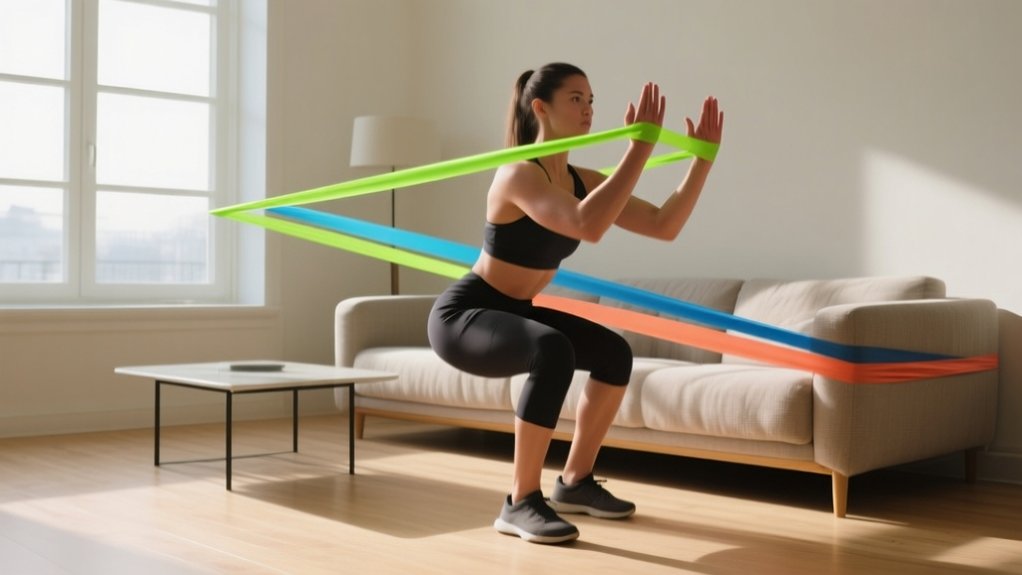
The rise of at-home fitness with resistance bands reflects a shift toward portable, affordable strength training options that fit varying schedules and space constraints.
Manufacturers report rising demand for sets with multiple resistance levels, compact storage, and durable materials.
Retail platforms highlight consumer interest through high ratings and frequent purchases, implying sustained use beyond initial curiosity.
Instructors note that home equipment lowers barriers to experimentation, enabling progressive overload and varied programming.
Accessibility supports diverse demographics, including newcomers seeking guidance, busy professionals fitting workouts into lunch breaks, and travelers seeking consistency.
Durability and odorless materials contribute to enduring, everyday use.
Why Bands Beat Bulky Equipment

Resistance bands offer a practical alternative to bulky apparatus by delivering versatile resistance in a compact form.
Their light weight and portable nature enable workouts anywhere, reducing setup time and space demands.
Unlike machines, bands provide constant tension through full range of motion, enhancing functional strength.
They accommodate varying strength levels and allow progressive overload with simple band changes.
Durability and low maintenance lessen ownership costs.
The absence of heavy hardware mitigates storage concerns, making home gyms feasible in small living spaces.
Accessibility supports diverse users, from beginners to seasoned athletes, without specialized training or facilities.
Bands also enable unilateral training and asymmetric grips, targeting stabilizers that machines often underemphasize.
They support rehabilitation and mobility work alongside strength, making programs adaptable for travel, illness, or time constraints with consistent use daily.
Getting The Most From A 5-Band Set
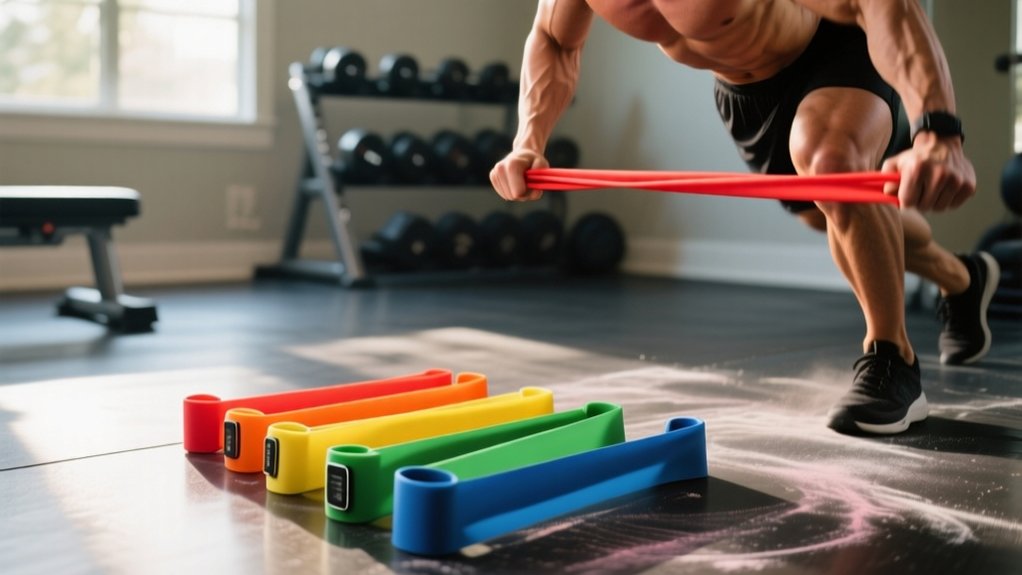
Utilizing a five-band set allows tailored resistance by combining bands and adjusting anchor points to suit any exercise, delivering progressive overload without changing equipment. Users adjust intensity by layering bands and selecting anchor heights, aligning resistance with movement phase. This approach maintains consistency across workouts while enabling quick transitions.
For compound moves, begin with mid-level bands, then advance through sets by stacking lighter bands or stepping closer to the anchor. Warm-ups should employ lighter resistance to prime joints.
Track progression by recording band combinations and repetitions. Consistency and proper form maximize results while reducing injury risk over time too.
Targeted Workouts for Every Muscle Group

How targeted workouts for every muscle group can be structured with a five-band set by selecting specific band combinations and anchor heights to tailor resistance for each region.
The five-band configuration enables progressive loading across major zones, including chest, back, shoulders, arms, core, hips, and legs.
Operators should select complementary bands to reach target ranges, then adjust anchor points to modify leverage and range of motion.
Emphasis is placed on controlled tempo, full extension, and deliberate pauses to maximize muscle engagement.
This approach supports balanced development and minimizes joint strain during routine sets.
Progression should be tracked with metrics.
Choosing The Right Band And Safe Use
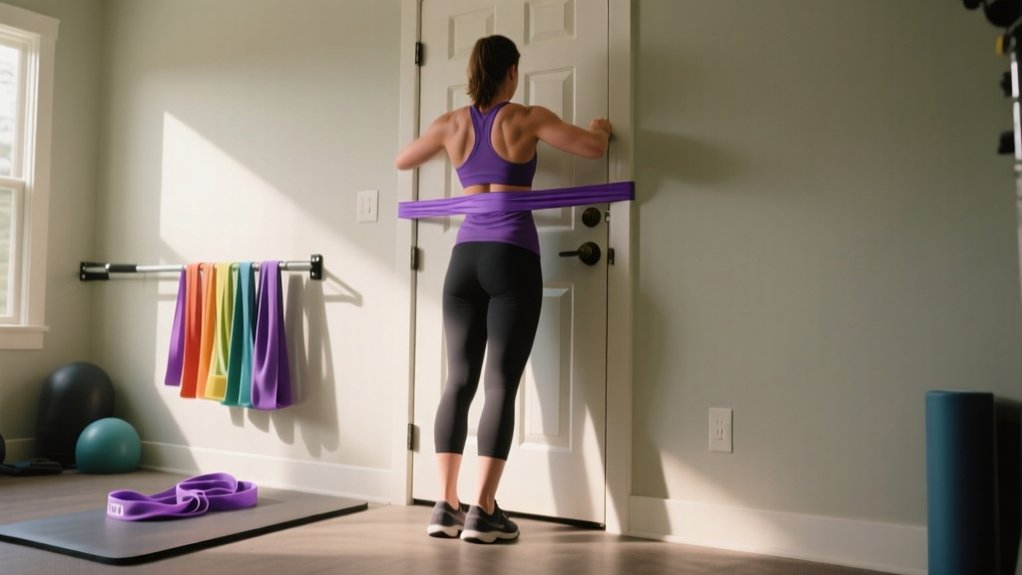
Selecting the appropriate band involves matching its resistance to the user’s current strength and the specific movement, ensuring progressive loading without compromising form.
For beginners, lower tensions (e.g., 5–15 lbs) support controlled reps, while intermediates progress to mid-range bands (15–65 lbs) and above for compound lifts like rows or presses.
The five-band set offers graduated resistance, enabling stepwise overload across exercises such as pull-ups, presses, and squats during home workouts.
Safe use emphasizes inspection, control, and proper anchoring.
Inspect for wear, avoid overstretching beyond 2–3x length, and replace damaged bands.
Practice slow movements with secure anchors and warm-ups always.
Conclusion
Ultimately, resistance bands emerge as a compact, adaptable solution that suits diverse goals. The article underscores how bands deliver constant tension, enable progressive overload, and support safer, controlled movements at home. By emphasizing versatility—from warmups to targeted rehab—the piece shows bands as accessible tools for beginners and seasoned athletes alike. With proper selection and safe use, users can build strength, mobility, and consistency, proving that scalable resistance transforms even small spaces into effective training zones.