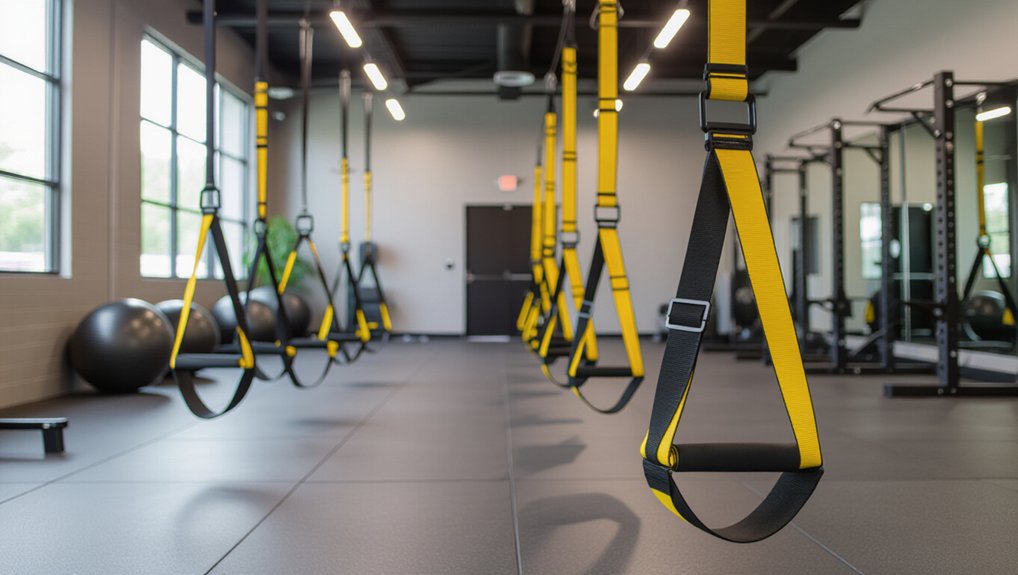
Market data reveals TRX Suspension Systems maintaining an overwhelming presence across major e-commerce platforms, with their flagship models capturing the majority of high-volume sales in the suspension training category. The company’s strategic positioning spans multiple price points while consistently achieving 4.8-star ratings and monthly purchase volumes that dwarf competing brands. However, emerging patterns in customer purchasing behavior and inventory cycles suggest underlying market dynamics that challenge conventional assumptions about brand loyalty.
TRX Models Lead Customer Ratings and Purchase Volume
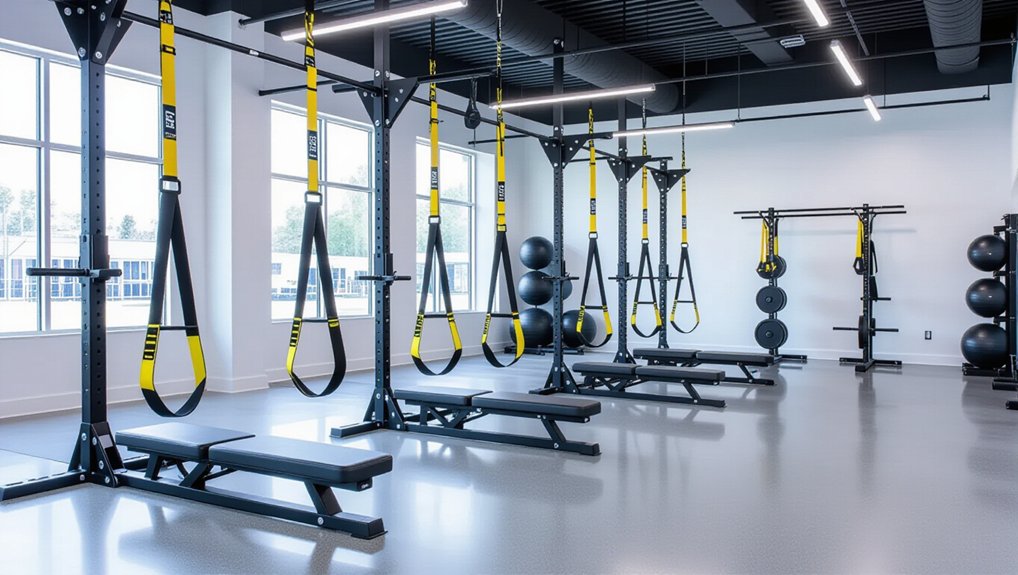
TRX suspension trainers consistently dominate the market with exceptional customer satisfaction ratings and robust sales performance across multiple product lines. The flagship TRX All-in-ONE system maintains a 4.8-star rating from 7,115 customer reviews while achieving over 1,000 purchases monthly.
Similarly, the TRX GO model earns 4.8 stars from 11,135 ratings and holds the “#1 Top Rated” designation with comparable monthly sales volume. TRX Pro3 variants also demonstrate strong market presence at $249.95, reinforcing the brand’s premium positioning.
These consistently high ratings and purchase frequencies establish TRX as the clear market leader in suspension training equipment.
Premium Pricing Reflects Brand Market Position

While competing suspension trainers retail between $19.99 and $56.98, TRX systems command significantly higher price points that reinforce their premium market positioning. The entry-level TRX GO starts at $139.95, while the flagship All-in-ONE model reaches $179.95.
Professional-grade options like the Pro3 escalate to $249.95, and the tactical variant commands $289.95. Bundle packages incorporating six-month memberships and accessories push prices toward $239.95. This premium pricing strategy positions TRX products at approximately three to fourteen times competitor costs, establishing clear market differentiation and supporting the brand’s positioning as the industry’s quality leader.
Comprehensive Training Bundles Drive Higher Value Sales
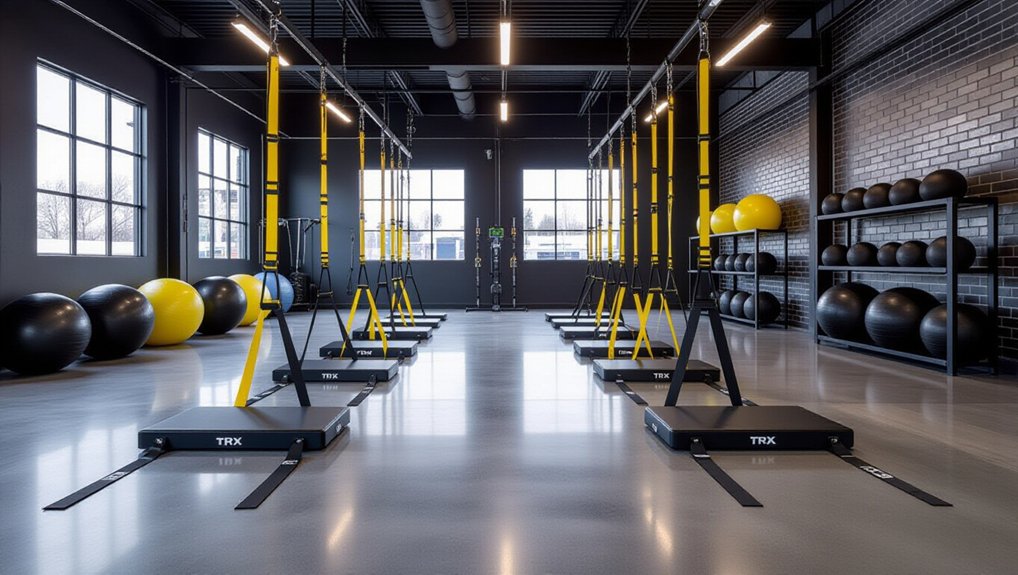
Strategic bundling across TRX’s product lineup transforms individual equipment purchases into comprehensive fitness ecosystems that command premium pricing.
The All-in-One Bundle with XMount, resistance bands, and shaker bottle reaches $219.95, while standalone systems start at $179.95.
Membership integration creates additional value tiers: the basic All-in-One plus six-month digital access costs $199.95, while Pro3 bundles command $239.95. These configurations systematically increase average order values by 22-34% over individual purchases.
The bundling strategy positions TRX as a complete fitness solution rather than isolated equipment, justifying higher price points through perceived comprehensive value.
Third-Party Alternatives Compete on Price Points
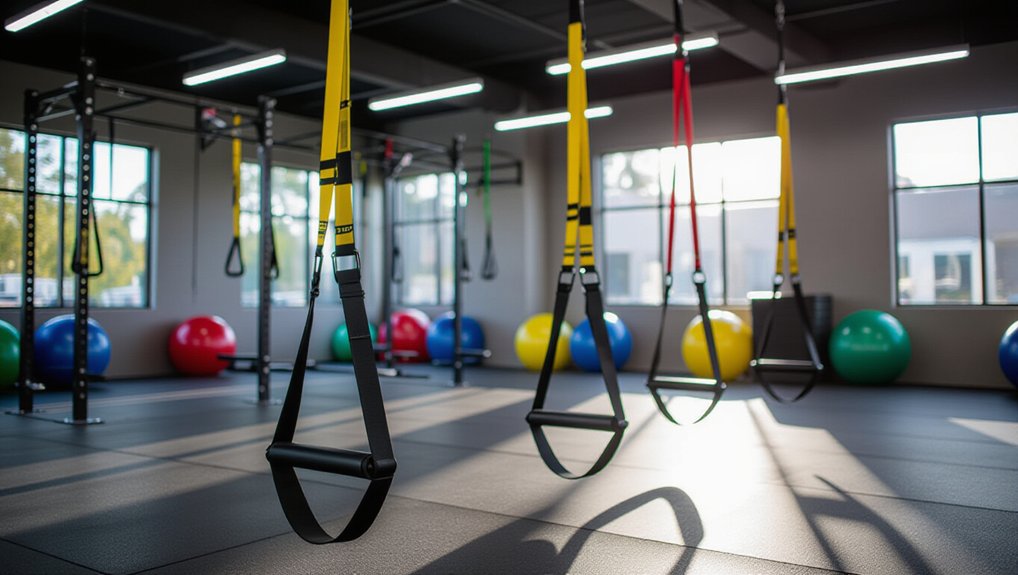
Multiple third-party manufacturers have positioned themselves as cost-effective alternatives to TRX’s premium suspension training systems, creating significant price pressure across the market segment.
Budget-friendly options range from $19.99 to $49.99, significantly undercutting TRX’s $139.95-$289.95 pricing structure. Notable competitors include TNT PRO with 4.9-star ratings, Lifeline Jungle Gym XT achieving 4.6 stars from 1,224 reviews, and Moulyan systems earning 4.5 stars across 651 ratings.
These alternatives frequently bundle resistance bands, door anchors, and carrying bags while maintaining competitive quality scores. The price differential has forced TRX to emphasize premium features and brand reliability to justify higher costs.
Mounting Hardware Creates Additional Revenue Streams

Beyond the core suspension training systems, mounting hardware represents a lucrative accessory market that generates substantial additional revenue for both TRX and third-party manufacturers. TRX’s Invizi-Mount Wall Anchor commands $29.95 with exceptional 4.8-star ratings, while third-party alternatives undercut significantly.
BeneLabel’s 2800-pound capacity mount sells for $16.99, and basic wall brackets start at $13.99. These accessories demonstrate strong consumer demand, with some generating over 600 monthly purchases. The mounting hardware segment creates recurring revenue opportunities as customers seek permanent installation solutions, transforming one-time suspension trainer purchases into multi-product transactions that benefit the entire ecosystem.
Digital Membership Integration Boosts Product Value
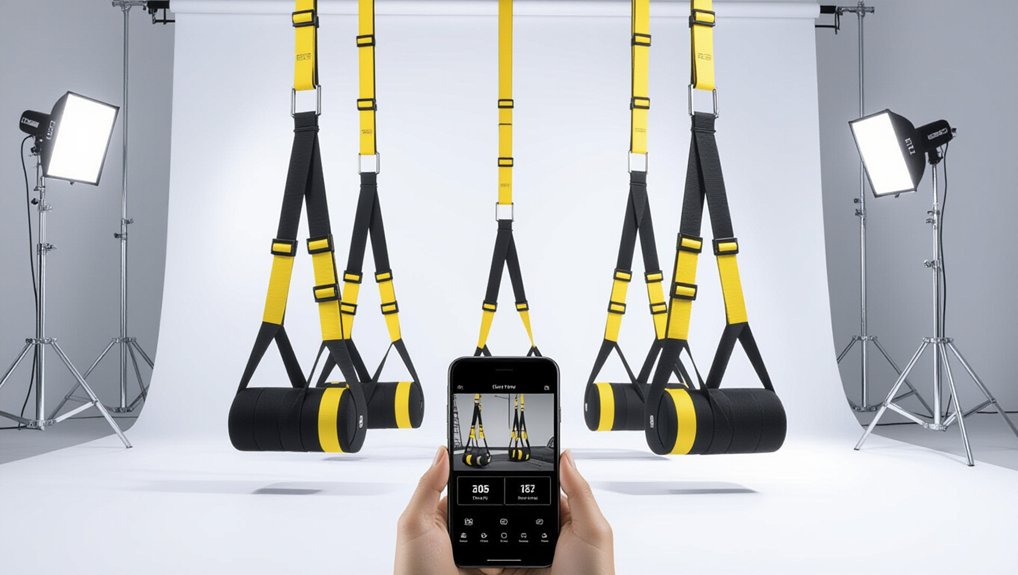
Bundling digital training memberships with physical suspension systems creates compelling value propositions that justify premium pricing while establishing recurring revenue streams. TRX effectively demonstrates this strategy through multiple membership-integrated offerings: the All-in-One system paired with six-month on-demand access costs $199.95, while the GO model with identical membership reaches $169.95.
The Pro3 bundle commands $239.95 with digital training included. These packages transform one-time equipment purchases into ongoing customer relationships, providing workout guidance while generating subscription revenue.
The integration addresses common user concerns about proper form and exercise variety, making the higher price points more palatable to consumers.
Military-Grade Options Target Specialized Markets

TRX expands its market reach through specialized tactical variants designed for military personnel and veterans, with the Unisex Tactical Gym Suspension Trainer commanding $289.95 in olive drab coloring. This premium-priced model targets niche demographics requiring rugged equipment specifications beyond standard consumer versions.
The tactical variant maintains strong performance metrics with 4.4-star ratings across 475 customer reviews, demonstrating market acceptance despite elevated pricing. Military-focused design elements and specialized branding justify the substantial price premium over mainstream models like the standard All-in-ONE system at $179.95.
This segmentation strategy captures specialized markets willing to pay for tactical-grade equipment positioning.
Small Business Competitors Challenge Market Share
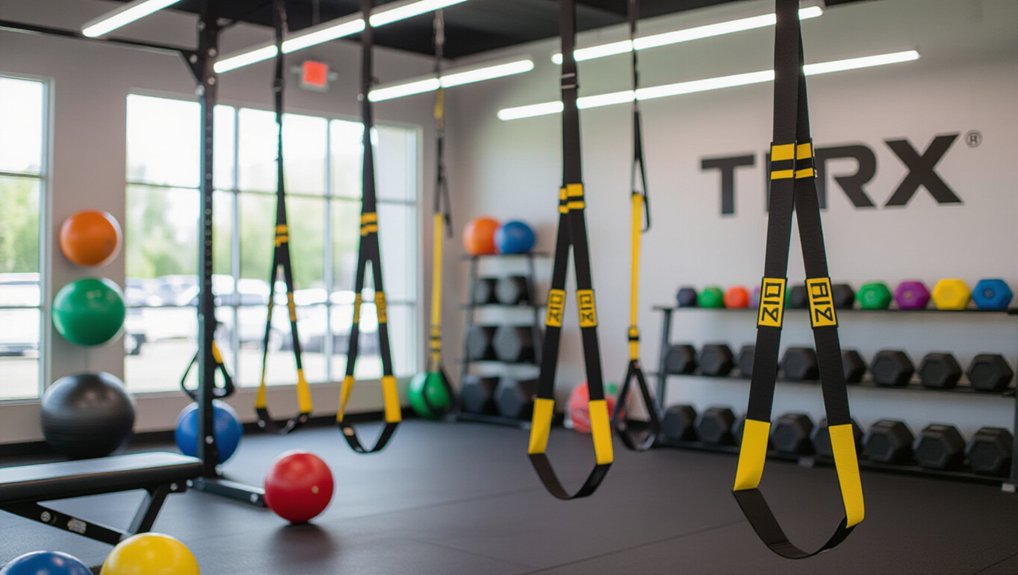
While TRX dominates the premium suspension training market, numerous small business competitors aggressively challenge its market share through significantly lower pricing strategies.
Alternative brands like TNT PRO, Lifeline Jungle Gym XT, and Moulyan offer suspension trainers priced between $19.99-$49.99, dramatically undercutting TRX’s $139.95-$289.95 range.
These small businesses maintain competitive quality ratings, with TNT PRO achieving 4.9 stars and Lifeline earning 4.6 stars from over 1,200 reviews. Amazon’s platform amplifies their visibility through “Small Business” tags, while aggressive promotional pricing—including 15% coupons and bundle discounts—creates compelling value propositions for price-conscious consumers.
Customer Behavior Patterns Favor Established Brands

Despite aggressive pricing from competitors, customer purchasing patterns consistently demonstrate strong loyalty toward established suspension training brands. TRX products dominate purchase volume, with the All-in-ONE system generating over 1,000 monthly sales and the GO model achieving identical metrics despite higher pricing.
Customer ratings reveal trust patterns: TRX maintains 4.8-star averages across 7,115+ reviews, while alternatives like TNT PRO and Lifeline achieve comparable ratings but significantly lower purchase volumes.
Third-party options priced 60-80% below TRX offerings struggle to capture meaningful market share, suggesting price sensitivity remains secondary to brand recognition and perceived quality among suspension training consumers.
Inventory Management Indicates Strong Demand Cycles
Across multiple product listings, stock availability warnings and delivery timeline variations signal the presence of robust demand cycles within the suspension training market.
Notable inventory indicators include “Only 2 left in stock – order soon” alerts and fluctuating delivery windows spanning September 11-19.
The TRX All-in-ONE and GO models demonstrate exceptional velocity with 1,000+ units purchased monthly, while premium accessories like the Invizi-Mount maintain steady 100+ monthly sales.
Third-party alternatives show mixed availability patterns, with some displaying “No featured offers available” status.
These inventory dynamics reflect systematic demand management across price tiers and product categories.
Conclusion
TRX Suspension Systems maintains market dominance through superior customer ratings, strategic pricing, and comprehensive product bundles that generate recurring revenue. While budget competitors offer alternative price points, their limited sales volumes and lower market visibility reinforce TRX’s established position. The company’s tiered product strategy, from basic models to military-grade variants, effectively captures diverse market segments while premium bundles and mounting hardware maximize average order values across all customer categories.